 The best place and time to enjoy a good thriller in the US is Minneapolis in winter, at least that's my opinion. The long, harsh, and dark winters, the snow covered white grounds, and the frozen lakes and dead trees, all conspire to provide the perfect setting for a perfect crime. It doesn't come as any surprise that many residents of Minnesota can trace their ancestry back to the Nordic countries, and that the writers from these Nordic countries have established themselves as leaders in this genre.
Writers like the Swedish couple Per Wahloo and Maj Sjowall, Henning Mankell, Steig Larsson, Hakan Nesser, Icelandic authors like Arlandur Indridason, and Norwegian writers like Jo Nesbo and Karin Fossum have comes to mind when one thinks of the crime thriller genre (although my introduction to non-British crime fiction was through the works of the acclaimed Swiss author and dramatist, Friedrich Durrenmatt, whose creation, Inspector Hans Barlach, seems to embody all the essential characteristics that define the typical Nordic detectives who all were created much later). All the Nordic detectives (like Kurt Wallander, Harry Hole, Konrad Sejer, Martin Beck, Carl Morck, Erlendur Sveinsson) have the same traits - they are sharp, contemplative, dedicated, single, and tortured souls. They all want to believe in the goodness of mankind but their daily crime investigations make it hard to have faith in that proposition.
 The creators of these memorable characters are highly innovative writers, each with a distinct literary styles - Wahloo and Sjowall uses the setting of the crime thrillers to analyze the perceived injustices of the utopian Swedish society from a Communist perspective, Mankell's crime fictions bring into focus contemporary issues (like immigration, cult religions, neo-Nazis) that simmer under the quiet surface of the peaceful Swedish populace, Indridason's stories deal with the issues like that of the limited gene pool in Iceland and its harsh weather in winter etc.
But what sets Karin Fossum apart? It's not the plot, for it's similar to all the other writer's. In fact her novels are much less of "who dun it?" than others. It is relatively easy to identify the culprits, and sometimes they are identified upfront by the author herself. There is hardly any Hollywood thrill that readers of Nesbo encounters in his novels. So what kind of thriller does Fossum write?! Karin Fossum's novels are not about "who", they are about "why", they are all psychological thrillers where the author gets into the minds of the characters involved in the story. She narrates both the victim's and the perpetrator's perspectives and the motives behind actions. Understanding the motives (like solving a puzzle) is the obsession of her detective, Konrad Sejer.
This meditative style of writing in the Nordic noir is very unique to Fossum, and it perhaps is a reflection of her past as a poet. Her writing is also shaped by her own personal experience of a crime in her own small and tightly-knit village community when she knew both the victim and the murderer. The interactions between people in small towns where everyone is aware that the criminal is right among them is an element that features prominently in all her stories.
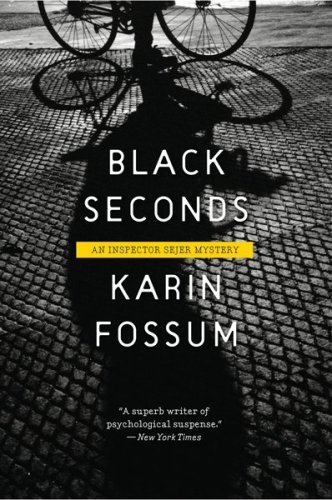 Her novel, Black Seconds, narrates a story of the disappearance of a little girl and how an innocent person is almost convicted only to later discover that the secret lies within the girl's own family.

 Bad intentions is another interesting novel which echoes the familiar motif in Fossum's work where there are no real villains or heroes, but it is the randomness of events that affects our lives in unforeseeable ways and with tragic consequences.
It is this insightful and tender analysis of human psyche and our relationships within the framework of a mystery novel that makes Fossum the unchallenged queen of Nordic noir. The philosophic and poetic treatment of often grisly subject matters is the hallmark of this truly distinguished writer of crime fiction.


